Adaptation to climate change through sustainable management of water of the urban area in Radom City (Poland)

Back to List
Updated: 15/12/2025
Adaptation to climate change through sustainable management of water of the urban area in Radom City (Poland)

Project Overview

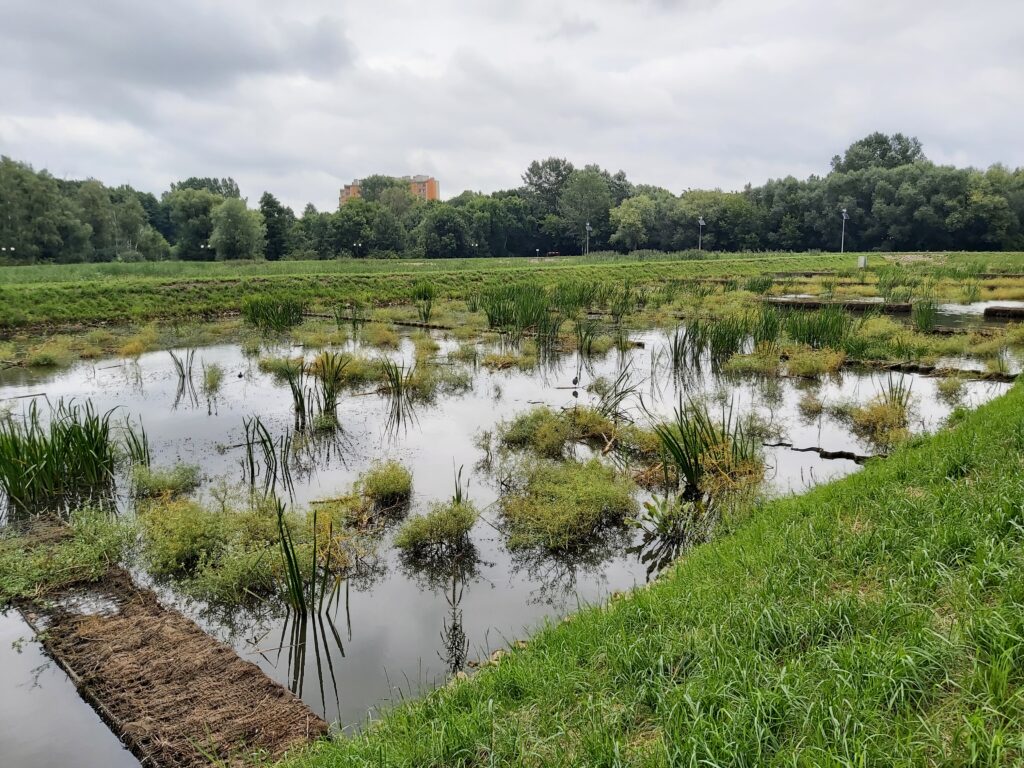
Urban and suburban catchments Ecohydrology approach was implemented in the city area – 112 km2 Ecohydrological solutions have been demonstrated at the level of: * Urban catchment * Rivers (Mleczna, Cerekwianka, Potok Północny) * Urban reservoir “Borki” – major recreational site in Radom City * Small blue-green infrastructure located in several places in the city center

Conserve Process NO
Enhance Process YES
Apply Complementary YES

Ecosystem Services

Provisioning

  • Provisioning Services are ecosystem services that describe the material or energy outputs from ecosystems. They include food, water and other resources.

Regulating

  • Regulating Services are the services that ecosystems provide by acting as regulators eg. regulating the quality of air and soil or by providing flood and disease control.
  • Moderation of extreme events: Extreme weather events or natural hazards include floods, storms, tsunamis, avalanches and landslides. Ecosystems and living organisms create buffers against natural disasters, thereby preventing possible damage. For example, wetlands can soak up flood water whilst trees can stabilize slopes. Coral reefs and mangroves help protect coastlines from storm damage.
  • Waste-water treatment: Ecosystems such as wetlands filter both human and animal waste and act as a natural buffer to the surrounding environment. Through the biological activity of microorganisms in the soil, most waste is broken down. Thereby pathogens (disease causing microbes) are eliminated, and the level of nutrients and pollution is reduced.

Habitat / Supporting

  • Ecosystem services "that are necessary for the production of all other ecosystem services". These include services such as nutrient recycling, primary production and soil formation.

Cultural

  • Cultural Services corresponds nonmaterial benefits people obtain from ecosystems through spiritual enrichment, cognitive development, reflection, recreation, and aesthetic experiences.

Major Issues

No issues provided.

EH Engineering Solutions

Following the ecohydrology concept, the hydrological assessment

Following the ecohydrology concept, the hydrological assessment was first step to analyse the risk in urban catchment. In particular, project has focused on the climate change (CC). Vulnerability assessment of the Radom urban space was conducted with the following: 1) Elaboration of the vulnerability assessment methodology. The methodology for the vulnerability assessment was elaborated based on the review of literature on this topic, existing case studies and experiences in other projects, and the review of the existing methodologies for the vulnerability assessment in the urban space, with the emphasis on the four key areas: 1. water: water ecosystems. 2. grey infrastructure. 3. green infrastructure. 4. socio-economic aspects. 5. potential to provide ecosystem services and support biodiversity.

Radom has a 4.8% share of parks,

Radom has a 4.8% share of parks, green areas and estate green areas in the total area, which is a much higher percentage than the average for Poland cities (0.2%). The legally protected areas cover an area of 378.96 ha, which is 3.39% of the total area of the city of Radom. In Radom there are: - ecological use "Bagno" located which covers an area of 6.86 ha, - protected landscape area called "Kosówka Valley" with an area of 246 ha, - Natura 2000 area Ostoja Kozienicka PLB140013 - 126 ha.

Multiple Ecohydrological Nature-based Solutions (Ecohydrological biotechnologies) have

Multiple Ecohydrological Nature-based Solutions (Ecohydrological biotechnologies) have been implemented, including Sequential Sedimentation Biofiltration System and renaturalization of river to restore its natural retention capacity. The effectiveness of the sequential sedimentation bio filtration system (SSBS) has been confirmed in the framework of the LIFE + (LIFE08 ENV / EN / 000517) project, where it was constructed and tested for water purification of recreational reservoirs in Łódź.

Project Activities

  • * Implementation of the EH-NBS (e.g. SSBS, ClimaPond, Treetrench, ClimaBOX)
  • * Education and stakeholders engagement to water management
  • * Climate adaptation in urban area with blue-green infrastructure

Expected Outcomes

* Demonstration of the ecohydrological approach to adapt cities to climate change. | The final project conference will be held on 24th of November 2022. Final report of the project will be available soon. Then, more than 3 research articles are planned to be finalized and published in prestigious scientific journals, to increase the impact of demosite. Publication of leaflets and brochures with project results.

Latest Results

No results provided yet.

Social-Ecological System

Integrated view of principles, objectives, stakeholders and methodology.

Ecohydrology Principles and Solutions

Hydrological Quantification
  • Quantification of the hydrological processes at catchment scale and mapping the impacts
Ecological Identification
Ecological Engineering & Nature-based Solutions
  • Following the ecohydrology concept, the hydrological assessment was first step to analyse the risk in urban catchment. In particular, project has focused on the climate change (CC). Vulnerability assessment of the Radom urban space was conducted with the following: 1) Elaboration of the vulnerability assessment methodology. The methodology for the vulnerability assessment was elaborated based on the review of literature on this topic, existing case studies and experiences in other projects, and the review of the existing methodologies for the vulnerability assessment in the urban space, with the emphasis on the four key areas: 1. water: water ecosystems. 2. grey infrastructure. 3. green infrastructure. 4. socio-economic aspects. 5. potential to provide ecosystem services and support biodiversity. | Radom has a 4.8% share of parks, green areas and estate green areas in the total area, which is a much higher percentage than the average for Poland cities (0.2%). The legally protected areas cover an area of 378.96 ha, which is 3.39% of the total area of the city of Radom. In Radom there are: - ecological use "Bagno" located which covers an area of 6.86 ha, - protected landscape area called "Kosówka Valley" with an area of 246 ha, - Natura 2000 area Ostoja Kozienicka PLB140013 - 126 ha. | Multiple Ecohydrological Nature-based Solutions (Ecohydrological biotechnologies) have been implemented, including Sequential Sedimentation Biofiltration System and renaturalization of river to restore its natural retention capacity. The effectiveness of the sequential sedimentation bio filtration system (SSBS) has been confirmed in the framework of the LIFE + (LIFE08 ENV / EN / 000517) project, where it was constructed and tested for water purification of recreational reservoirs in Łódź.

Objectives

EH Objectives
Water 3/5
Biodiversity 3/5
Services 4/5
Resilience 4/5
Cultural Heritage 0/5
Project Objectives
  • Radom is a sister city to Banská Bystrica – Slovakia, Daugavpils – Latvia, Magdeburg – Germany, Ploiești – Romania, Vilnius – Lithuanian District Municipality, Stara Zagora – Bulgaria and Talavera de la Reina – Spain. This would significantly increase the understanding and dissemination of global climate change idea among many of EU cities. The Town Hall Department of Environmental Protection will be responsible for the project implementation to the extent of their authority. University of Łódź provides several courses where Radom City demosite plays important role in students education. Among the, the “ECO-CITY” course. One of the Ecohydrological Nature-based Solutions, a ClimaPond, is installed at the kindergarden (no 11, Kościuszki str, 10, Radom), so the children can learn about ecohydrology and water harvesting from the very beginning of their education. Another EH-NbS is located at the Preliminary School no 11 (Gagarina str. 19, Radom).

Key Stakeholders

University of Łódź, UNESCO Chair on Ecohydrology and Applied Ecology Municipality of Radom (Radom city) Waterworks Company in Radom (Municipal Waterworks) FPP Enviro Sp. z o.o.

Methodology

  • Following the LIFE project objectives, the proposed Ecohydrology Demosite is: * Increasing the retention capacity of existing reservoirs by 10 to 50% = increasing the capacity to buffer extreme flows * Improving the self-cleaning capacity in watercourses and partially in reservoirs. * Slowing down extreme water flows on selected watercourses by 10 to 20% * Demonstrating the restoration practice, including meandering, of the Mleczna River on a section of 400 - 600 meters, and the restoration of an ecological corridor