Nature-based solutions (NBS) for water management draw on ecosystem processes to enhance water availability, improve water quality, and strengthen resilience to climate-related hazards such as floods and droughts. UNESCO’s Ecohydrology Programme, an essential part of the Intergovernmental Hydrological Programme (IHP), promotes sustainable water management by integrating hydrological and ecological processes and a transdisciplinary approach. The Programme also coordinates a global network of more than 60 ecohydrology demonstration sites that showcase innovative, community-rooted NBS applications across diverse environmental and socio-economic contexts.
Ecohydrology helps to enhance water security, support biodiversity, reduce disaster risk, and advance sustainable development goals. It can deliver environmental and social benefits at a lower cost than conventional infrastructure through NBS, such as wetland restoration and natural water-retention structures in the landscape. Most importantly, ecohydrology helps integrate these solutions in a systemic way to enhance catchment resilience and improve watershed governance.
Timor-Leste is increasingly exposed to droughts, floods, and severe soil erosion, pressures intensified by climate change, i.e., rising temperatures, and more extreme rainfall events. These stresses threaten water availability, ecosystem health, and livelihoods. Adopting NBS and ecohydrology approaches offers a resilient, integrated pathway for managing water and ecosystems that is aligned with Timor-Leste’s needs and cultural context.
Summary of the Ecohydrology Workshop in Timor Leste, Dili, 25-26 November, 2025
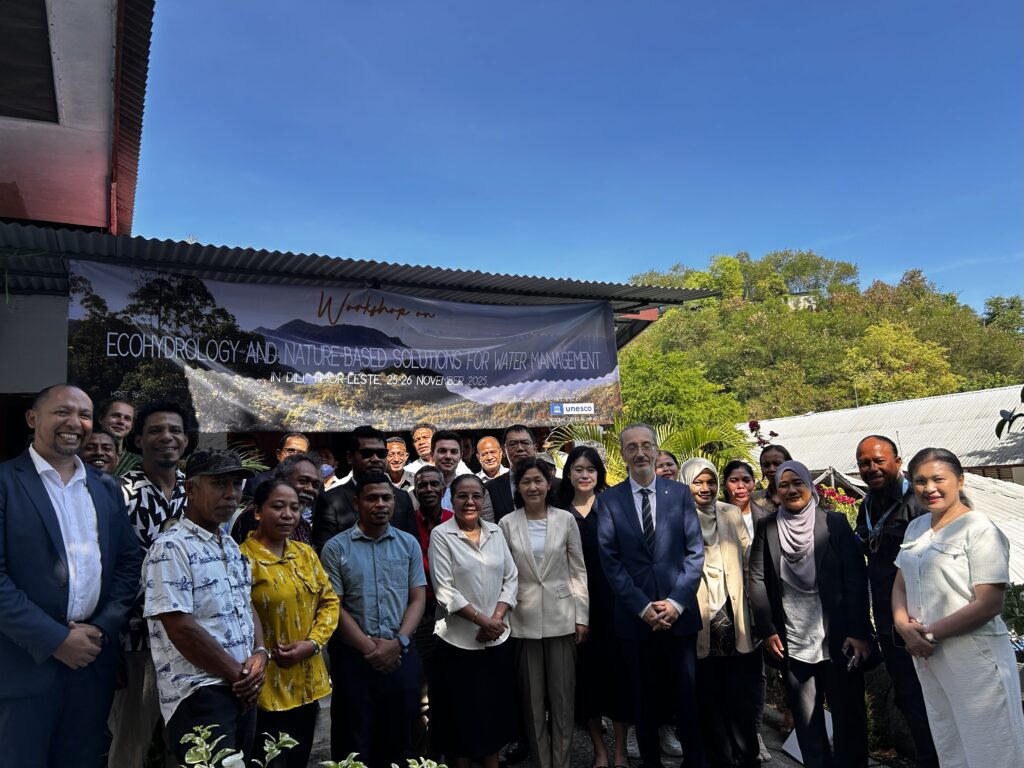
PERMATIL (Permaculture Timor-Leste), in collaboration with the UNESCO Regional Office in Jakarta, convened a two-day workshop titled “Ecohydrology and Nature-Based Solutions for Water Management” in Dili. Participants included national institutions responsible for water, environment, and forestry; the UNESCO National Commission; NGOs; international partners; and regional experts (Figures 1, 2 and 3).
The workshop aimed to:
- Build technical capacity in understanding and applying NBS for water and ecosystem management in the Timor-Leste context.
- Highlight the importance of integrating local and indigenous knowledge, strongly championed by PERMATIL and local communities, as a complement to scientific methods for climate adaptation.
- Initiate discussion toward establishing an Ecohydrology Demonstration Site in Timor-Leste, building on existing restoration initiatives.
- Strengthen regional cooperation and stakeholder networks to support sustainable, nature-based water management.
Timor-Leste is developing a national water-resource and sanitation framework to improve long-term water security for people while beginning to incorporate ecosystem protection and climate resilience. The Ecohydrology Demonstration Site can serve as a key component of this strategy, providing evidence, capacity building, and guidance to support broader water management actions in the future.