Project Overview
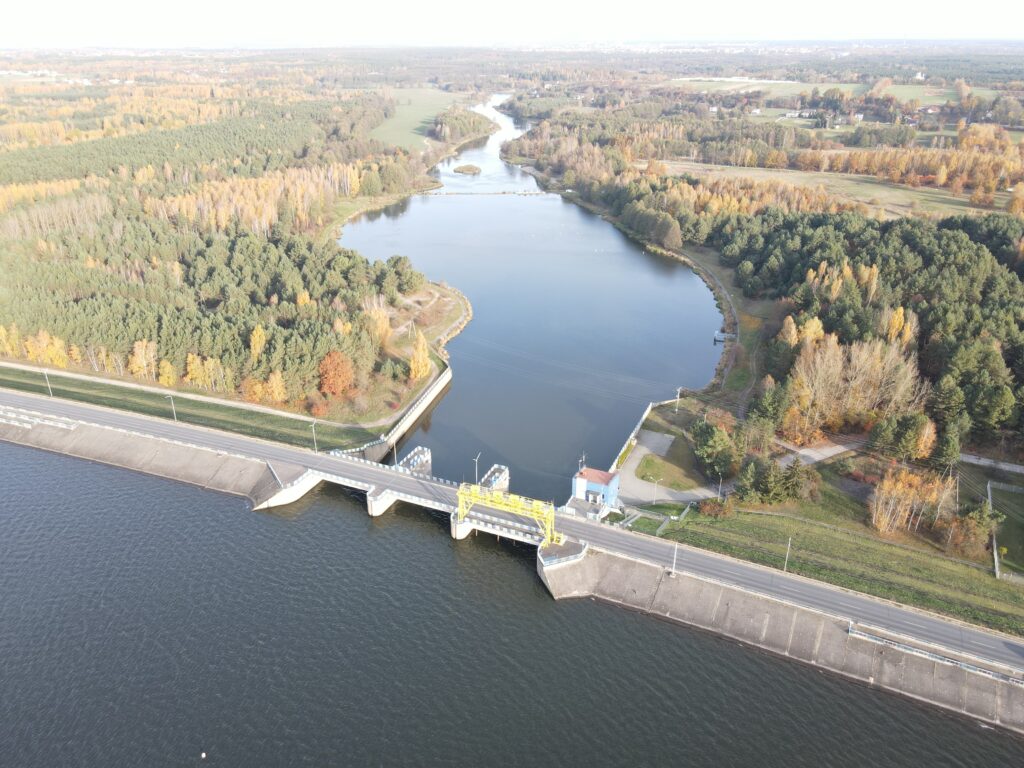
The Sulejów Reservoir is a shallow and eutrophic artificial reservoir built in 1974, situated in the middle course of the Pilica River in central Poland. | The Sulejów Reservoir was used as a drinking water reservoir for the Łódź agglomeration until 2004, and currently, it mitigates flood and drought. It is also an important recreational site (fig.1). | The Pilica River is the LTSER Platform of the European Long-Term Ecosystem Research Network (LTER-Eu). LIFE+ EKOROB project ‘‘Ecotones for the reduction of diffuse pollution’’ (LIFE08 ENV/PL/000519) are located in the catchment of the Sulejow Reservoir.
Ecosystem Services
Provisioning
- Provisioning Services are ecosystem services that describe the material or energy outputs from ecosystems. They include food, water and other resources.
- Food: Ecosystems provide the conditions for growing food. Food comes principally from managed agro-ecosystems but marine and freshwater systems or forests also provide food for human consumption. Wild foods from forests are often underestimated.
- Fresh water: Ecosystems play a vital role in the global hydrological cycle, as they regulate the flow and purification of water. Vegetation and forests influence the quantity of water available loc
Regulating
- Regulating Services are the services that ecosystems provide by acting as regulators eg. regulating the quality of air and soil or by providing flood and disease control.
- Moderation of extreme events: Extreme weather events or natural hazards include floods, storms, tsunamis, avalanches and landslides. Ecosystems and living organisms create buffers against natural disasters, thereby preventing possible damage. For example, wetlands can soak up flood water whilst trees can stabilize slopes. Coral reefs and mangroves help protect coastlines from storm damage.
- Waste-water treatment: Ecosystem
Habitat / Supporting
- Ecosystem services "that are necessary for the production of all other ecosystem services". These include services such as nutrient recycling, primary production and soil formation.
- Habitats for species: Habitats provide everything that an individual plant or animal needs to survive: food; water; and shelter. Each ecosystem provides different habitats that can be essential for a species’ lifecycle. Migratory species including birds, fish, mammals and insects all depend upon different ecosystems during their movements.
Cultural
- Cultural Services corresponds nonmaterial benefits people obtain from ecosystems through spiritual enrichment, cognitive development, reflection, recreation, and aesthetic experiences.
- Recreation and mental and physical health: Walking and playing sports in green space is not only a good form of physical exercise but also lets people relax. The role that green space plays in maintaining mental and physical health is increasingly being recognized, despite difficulties of measurement.
- Tourism: Ecosystems and biodiversity play an important role for many kinds of tourism which in turn provides
Major Issues
Eutrophication and toxic cyanobacterial blooms due to
Eutrophication and toxic cyanobacterial blooms due to heavy pollution (P and N) from point and non-point sources of pollution (fig.2).
EH Engineering Solutions
Integration for synergy denitrification and biogeochemical barriers
Integration for synergy denitrification and biogeochemical barriers with highly efficient diverse plants to enhance nutrients reduction in ecotones zone.
Hydrobiomanipulation for enhancement of filtering large zooplankton
Hydrobiomanipulation for enhancement of filtering large zooplankton by the water level regulation.
Pressure mapping and quantification of emissions with
Pressure mapping and quantification of emissions with the use of modelling.
Project Activities
-
Evaluation and monitoring of the health risks due to toxic algal blooms.
-
Evaluation and monitoring the nutrient retention function of riparian vegetation.
-
Construction and monitoring of diversified ecotones.
-
Academic research (ERCE) and academic training course (Master and PhD in University of Łódź, Erasmus Mundus Master of Science in Ecohydrology).
Expected Outcomes
Reduction of cyanobacterial blooms and pollution due to the nutrient loads.