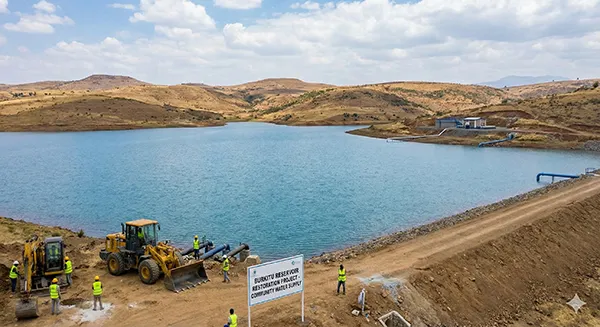
Project Overview
Ribb watershed is located in Lake Tana Sub Basin, NW part of Ethiopia, in Amhara Regional State. Ribb watershed has a total drainage area of 1790 km² and the main Ribb river is about 129.7 km long, flowing towards the west until it reaches Lake Tana.
The watershed demonstrates severe land degradation. The problem has been long aged and deep rooted, as the watershed is one of the aged agricultural areas. The activities resulted in progressive depletion on resources through haphazard deforestation, overgrazing and over cultivation.
"This project aims to establish a UNESCO Biosphere Reserve at Lake Tana - For People & Nature."
Ecosystem Services
Provisioning
- Food: Crops from agro-ecosystems.
- Fresh Water: Regulating flow.
Regulating
- Climate: Carbon sequestration.
- Hazards: Flood buffering.
Major Issues
Toxic Blooms
Frequent toxical blooms occurring in Tana Lake due to nutrient overload.
Land Degradation
Severe erosion due to agricultural activities in upper catchment.
EH Solutions
Phytotechnology
Restitution of eroded soils by application of biodegradable geofibers.
Shelterbelts
Creation of woodlots to prevent wind erosion.
Biofiltration
Construction of a sedimentation-biofiltration system (SBS).